
Insight
User Research, AI, And The Gap Between Data And Understanding
12 May 2026 Customer Experience Management
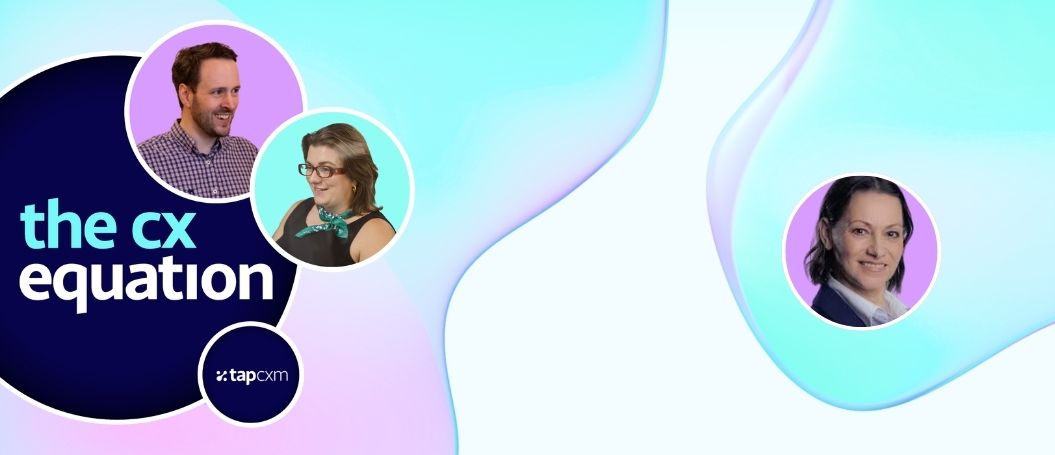
In this episode of The CX Equation, Emmanuelle Savarit, senior research and strategy leader with twenty years’ experience across financial services, government, and consumer platforms, explores how user research creates business value, what it takes to embed insight into organisational decision-making, and how AI is reshaping the research process.
Most teams have more data than they know what to do with. What they often lack is the context to interpret it well. That’s the thread running through this conversation with Emmanuelle Savarit, who, until recently, led global user research at one of the world’s largest food delivery platforms, Just Eat.
Emmanuelle’s perspective is rooted in practice rather than theory. She’s worked across environments as different as trading floors, government digital services, and consumer marketplaces, and what comes through is how consistent the underlying challenge is: organisations tend to build things based on what they think they know about users, rather than what the evidence actually shows.
Research, in her framing, isn’t primarily about innovation. It’s about limiting risk. Making sure there are no gaps in the user journey that quietly erode retention, trust, or conversion.
The conversation also covers the practicalities of making research land inside a business, and why the most impactful insight tends to come from triangulating multiple data sources rather than relying on any one of them.
On AI, Emmanuelle’s take is grounded: it’s meaningfully improving research workflows and throughput, but the interpretation (particularly on strategic questions) still needs human oversight.
Things you’ll take away from this episode:
- Why research is fundamentally about limiting risk, not just generating ideas
- What it looks like when user needs and business needs genuinely align (and what happens when they don’t)
- The difference between what users say they do and what they actually do, and why it changes what you build
- How AI is improving research throughput, and where it still needs a human in the room
- What research maturity looks like inside large organisations, and how to move up the curve
- Why researchers without a business lens rarely influence the decisions that matter
There’s a version of user research that lives in a separate team, produces reports nobody reads, and gets called in too late to change anything. Emmanuelle’s been in enough organisations to know exactly how that happens, and to be quite clear about what it takes to avoid it. The answer isn’t more research. It’s research that’s connected, from the start, to decisions someone is actually trying to make.
You can listen now on your favourite podcast platform, or watch the video on YouTube.
Chantelle – 00:36
On today’s episode of the CX Equation, we’re delighted to welcome Emmanuelle Savarit, an expert in user experience and user research. Emmanuelle is a senior research and strategy leader with more than twenty years of experience helping organisations turn digital data and AI capabilities into measurable business value.
Having led research and insights at organisations, including the London Stock Exchange Group, she now leads global user research at one of the world’s largest food delivery platforms.
In today’s conversation, we’ll explore how user research drives real business impact, how AI and automation are reshaping research and decision making, and how organisations can embed insight into everyday ways of working to drive loyalty, engagement, and sustainable growth. Welcome to the podcast, Emmanuelle. It’s great to have you.
Emmanuelle – 01:21
Hi. Very nice to be here, and thank you for inviting me.
Mark – 01:25
You’re welcome. It’s great to have you on. So I’ll start, Emmanuelle, you’ve had an extensive career across user experience and user research. What is it that drew you into user research in the first place?
Emmanuelle – 01:38
So I’m an academic by background. So I was working in academia. I’ve got a PhD in Psychology and in Human Interaction. Back then, we were not using technology that much, but we were doing lot of work into how people interact with object. And we started doing some work on Visio stuff, which were very innovative at that time and how people interact with technology. So very quickly, I decided to see why it’s not happening in industry because it’s very important in the academic environment. It can be limited and slow sometimes, so I thought it was quite good to move to the industry. So one day, someone reached out to me and said, “would you be interested to work with us and do the research?” So I set up my company, and I started being a contractor. I’m doing what we used to call usability, but like I say, UX research is far more than usability. So it’s where I started. Before it was usability, then after it was user research and UX research, product research, anything, AI research. So the research still remains, so that’s a good thing.
Mark – 02:45
And how important do you see that research element in making sure companies deliver a great customer experience?
Emmanuelle – 02:52
I think what is important with user research or customer research is that we put the user at the centre of all our investigation. So when you build a product or if you offer a service, actually understanding the user need is fundamental and essential to actually build the right service of the right product. Many organisations in the past were building services or products, but they didn’t take into consideration the user. And with the democratisation of technology… (I sound very old when I’m saying that, but before, we didn’t have a smartphone, we didn’t have computers, not everyone had a computer, you had one computer in the family if you were lucky.)… But then with this democratisation when every people got their own laptop, everyone more or less got a smartphone or a tablet. So we had to understand how those people, who were not like scientific or people working in engineering, actually, how they’re going to interact with the device and software which are in those devices. So it was very important at that time of digital transformation and democratisation of technology that, naturally, we understood the end user and to see how we could provide a product which is easy to use. So this is very important.
Chantelle – 04:07
Yeah. I guess as you say as well, as the technology is advancing so quickly, user needs are also advancing and constantly changing based on what they’re able to do.
Emmanuelle – 04:15
Constantly changing. Everything! And it’s not only about the end user when you see the customer. But when we mean user, it can be any professional using a tool. It could be anyone in the back who are using tools. So it’s very important to understand how that fits with their work environment as well. There’s the customer who generates revenue and these people who are facing the end product, but all the people in the chain and in the user journey also need to be able to interact with the product.
Chantelle – 04:44
Absolutely. We’ve alluded to the fact that you’ve worked across some pretty complex and highly regulated industries, which is quite different to the faster moving ones that you’ve done more recently, such as food delivery. How have you found working across the different types of cultures in those different types of companies?
Emmanuelle – 05:00
I always gets super excited to work in a new sector because it’s where you can adapt your research method to the new environment. So when I work for the London Stock Exchange (I worked in finance quite a bit in my career actually), it was very fascinating to see professionals interacting with the digital product. And when you look at the London Stock Exchange financial platform, actually, the end users were traders, analysts, people working in corporate finance. So it’s those people who are making very difficult decisions who could have a huge impact on the world economy, so we needed to make sure we could provide the right data at the right time and the right tool for them to actually perform their jobs. So you have to spend a lot of time to know your users, understand what is their job, which tasks they are doing, and what is their environment. When you see someone with six or nine screens, how do they get the information they need? I spent hours on trading floors when I started work, when I was working at Thomson Reuters – we were a financial platform as well. You had to spend time on the trading floor to see how it works and understand your users. But it’s not only about the complexities, it’s really to have the context and understand the sector of activity.
Mark – 06:14
I don’t actually know how it works. So would you spend time on a trading floor, or would you have traders come in and help you design products? Or are you taking requirements and kind of using your own problem solving skills to come up with what the right finished product is on what’s gone before?
Emmanuelle – 06:31
All of those. So spending time on a trading floor is very important. It’s all the discovery work, and it’s contextual inquiry – that is very important for understanding the surrounding environment, what is their habitat, where they interact every day. They may complain about something or they want features, so we may take that into consideration and to see how it fits with the overall product. And that is very important for the researcher to actually identify not only that the product is important for the end user, but how many user actually going to use it. Because if you decide to build a new feature, you need to really understand the return on investment for the business, which is building it. And people tend to forget about we can always develop many features, but where is this feature actually going to have a financial impact for the business.
Mark – 07:17
You don’t want too many features. Right? Because then things become harder to navigate or you introduce more chances of things going wrong.
Emmanuelle – 07:24
Absolutely. But it’s also it’s very interesting to look at something which is very complex, like a trading floor and a trader. But also what is important when you look at people who are actually not very good with computers because we still have some people, who’re not in front of their computer every day. And when I was working for the government for the Skills Funding Agency where they had all the apprentices, I spent time with the tailors to try to see how they are working. And you realise there, on Saville Row, which was beautiful, they make some beautiful clothes and suits, and the craft is amazing, but you realise they had one very old computer, which was for the accountant, and all the rest had no devices except their smartphone. So when we were developing the digital service for the Skills Funding Agency for them to find apprentices or to find a training provider to train their apprentices, we had to test it with them. So I used to come with my laptop, and then after I start coming with an iPad, and I came with a phone, and we were testing with them. So it was test, improve, test, improve, and trying to really understand their needs and if they can navigate through the process. Complexity is not always based on a complex environment. A simple user journey can be complex for someone who don’t use those devices every day or use software every day.
Mark – 08:51
So you can have businesses that might have tens of thousands, hundreds of thousands of staff that you’re designing for, or if it’s customer-facing millions and millions of customers. I suppose how do you do user research at that scale and make sure that the user research is suitable for what’s needed to help inform those businesses?
Emmanuelle – 09:10
But what is important is to understand when we talk about minimal viable product, okay, so we try to do a simple journey. So that is the core of the product, and you need to have everyone to be able to use it. So you look at the commonality across all your customers or end users, and then you start building something. And then you can start adding features based on the number of people who are going to use it. And then you can incrementally start to increase the features you’re going to put. You prioritise what is the most important and fundamental features of an end to end journey, that are going to be needed for the user. And then after, you can incrementally increase, and you do your research. You work very closely with market research, with data analytics, with people working in business intelligence to actually make those call of where you focus your attention because you can’t do everything. And in most organisations, researchers are not the bigger teams in general. So they have to really prioritise where they will add more value to the business. So you’re always trying to find the right balance. If you look at, for example, the GDS and the gov.uk, they had one researcher for every project. But they were super agile. So it was really everyone working together deciding what was needed. And, also, we had an assembly in the morning, and we may have find something in the research so we could very quickly say, this is what’s happening, this is what’s happening, and it’s what we need to maybe change or adapt. But keeping in mind, a government platform or service, the whole population needs to be able to use it because we all need to register, get your driving license, renew your driving license, apply for benefits, pay your taxes, get your pension, everything. So you really need to make sure that it’s usable for everybody.
Mark – 11:13
I’ve just had to apply for my visa to travel to India. I’m about to go on holiday, and I’m pretty sure the Indian government didn’t do any user research on that platform because it wasn’t a very good experience.
Emmanuelle – 11:26
Well, The UK one is one of is the best in the world. People, you know, the reputation. And we spend a lot of time when I start working. I worked on several exemplar when I had my agency.
Chantelle – 11:35
I guess within that then, from my own curiosity, you mentioned a few examples there, like people applying for pensions, people applying for driver licenses. You get different types of profiles within those user journeys, right? So if people are applying for pensions, they’re gonna have a very different profile than someone, that 17 year old that’s applying for a driving license.
Emmanuelle – 11:58
But the service need to be usable for everybody. So that’s the main thing. And one day, you may not need to apply for a driving license or renew your driving license. Maybe one day, you will. All the service look very similar, the process. And I think they’ve got an amazing design system, so they can replicate things which are working well. We’ve tested a lot.
Chantelle – 12:18
So on that, just recently, you’ve worked in some pretty big businesses with millions of customers – we’re talking about the consumer facing side now. Why is strong user research so important in the fast moving business, the food delivery platform, that you work for? And is there anything that tends to go wrong when companies skip the user research part of it?
Emmanuelle – 12:37
So it’s important because you’ve got so many different type of user, and what you want is to make sure their experience is smooth. You make sure the people stay on the marketplace. If you look at Amazon, it’s the same thing. You want to make sure that people stay on the platform and keep actually purchasing on the platform. And you’ve got so many different things and different suppliers and different partners in it, and it’s a very complex environment. So research is very important to make sure that everything is aligned and there won’t be any gaps, any drop at any point in the user journey. So it’s very important to have researcher to limit the risk. And I do see that research in the digital world is really to limit the risk. It’s good, of course. It’s good to understand what you want to do if you want to create a new product, understand what could be the needs for the user for those and to create the right digital product for it. But the main thing is to limit the risk and to make sure people stay on the marketplace and keep buying. That’s the purpose of the marketplace. No?
Mark – 13:42
Do you ever find any resistance, not necessarily resistance, but companies who don’t necessarily think that the research is the most important step? They might have done it before and think they can design something quite effectively without the research.
Emmanuelle – 13:56
Oh, many. Yeah. I’ve work in so many organisation. Some organisations don’t see the value of research, and they don’t see why it’s important. “Oh, we know our users. We know, we know, how to use the platform. We know what to design. We know. We know”. Yes. You know. They all know. Of course, you have got a good intuition, but the main thing is you need to explain and show them. I think by showing your stakeholders the benefit of doing research is very important. When they see the value, they will keep asking you to do the research.
Mark – 14:29
Have you seen people fall into some traps by not doing the research?
Emmanuelle – 14:34
Yes. Some organisations have got a greater appetite to risk, so they won’t do the research. And good for them. If it works, amazing. That’s great. Other companies have got less appetite for risk, and they want to make sure when they build something, it’s going to work properly. And sometimes, you do research when you have something not working and you want to understand the why. So research is not only doing usability testing. It could be so many things. And we put the data together. And why I always say that UX research is so powerful and it’s a powerhouse, like I mentioned in my book, is we’ve got the context of the user. So we can bring all the data, and we can triangulate all the data that we’ve got. But the fact that we’ve got the context, our interpretation of the data is going to be so spot on. Because taking all the data in isolation, you won’t get the full picture. So to understand the context and then the user, the product, and get all the data you can find that you need for your analysis. And then when you triangulate all that data, it is crystal clear what you have to do. And that’s when you bring that to the stakeholder, when they understand this power, they will say every time they need to make a decision, they will come to me and say, “OK, do we have data about this?” “Do we have data about that?” “What is your take on this?” And then, maybe we’ve got the data or we already done some work previously, or we just gather and put things together and just try to help them to make the best call.
Chantelle – 16:17
So just on that then, you spoke a little bit about using your research to make decisions. What does it actually take day to day to make it part of everyday ways of working rather than just something that teams are it’s an afterthought? Teams go, “oh, hang on a minute. We’ve got this user research team we can go to”. I imagine there’s some embedding in the culture and sort of the ways of working that people.
Emmanuelle – 16:38
Like any organisation, the culture is very important. In my first book, Practical User Research, published in 2020, I mentioned the UX research maturitym, as there are different levels of maturity. Most of the time when I arrive in an organisation, it’s maturity level one or level two and to reach the top of the maturity, it takes time. You need to make sure people understand and see really the value. And when I talk about return on investment, what is important is to speak the language of the business. If you speak the language of the business, they’re going to listen to you, and you need to be straight to the point. Understand the business. Understand what people want and need in the business. What is in there giving them a headache and how can we help them. And that’s our job, as a researcher, to actually provide data so they can make the best decision. It’s building relationships, one step at a time, you modify the way people perceive research. Some people have got great a research team, but it doesn’t have a seat at the table. So they need to change a little bit their approach on how they talk about research, and be very businesslike and to talk the business language. I found that once I managed to speak the business language, and once I realised that I needed to know what the business – my stakeholder – wanted, what was the headache every day, where could I help them, I could always try to support them.
Mark – 18:13
Are there other teams as well that you can work with that really help you make your point? I’m thinking analytics teams. If you can back up the kind of the research side and what people are saying with the data of what they’re doing, is that then creating an even more powerful story?
Emmanuelle – 18:27
We use every data available. So data analytics, it’s our best friend. Marketing, it’s our best friend. Business intelligence, it’s our best friend. And you can go to the commercial team, but we can get financial data and we can link it to it. So if you’ve got all those functions, they have to work together. They can’t work in silo. I’ve been working with market research for a long time. The relationship has never been amazing. It’s always a bit territorial because we overlap on few things. But over the years, I really improved the relationship, and I worked very, very hard to build this relationship with the market research internally. And it changed the game completely. So spending a lot of time to speak with design we know design is going to embrace a research. Product is going to embrace it. So spend your time with the marketing team, with the data analytics, with the data scientists. Help them as well to design the experiment because we know what we could do, and we can bring some of the insight we’ve got. So when we put all the insight together, all the data can quote from any department. You can really build a very strong case, and the researchers should be able to triangulate and see something coming up of the data.
Mark – 19:50
Many years ago, I worked at Morrisons Supermarkets, and I know there was a feeling in some senior people that if you asked customers what they thought, they didn’t always tell you the truth. And they’d say one thing, but they would then do something else. Actually, when we were able to take data about who was buying what in what stores and then add what customers were saying and put ethnography and other kind of research on top of that, you could all of a sudden come up with a much better story and help people understand what was working well, but also then get into the why it was working, which EPOS data and sales data doesn’t always tell you. It just kinda tells you the what. And then when you combine those two things together, you had something really powerful.
Emmanuelle – 20:32
It’s not about what they say. It’s what they do. And what we’re interested is not what they say. It’s about what they do, what they need to do, and what we want them to do. We tend to forget about that. There’s a lot of user needs. Yes. The user needs to do something, and if the user need is related to the business needs, you try to get both together, and you find the right balance between the two. Where they meet is what you need to build.
Mark – 20:59
Is that ever a friction matching the user need to the business need? Can they sometimes be out of sync?
Emmanuelle – 21:04
Well, this is one thing which I’m always doing. It seems to work, apparently.
Chantelle – 21:08
So you spoke loads about the insight there and working with different teams to sort of get the whole story. Once you’ve got the insight, what helps teams move from insight to action? So what are you doing off the back of collecting all of that data?
Emmanuelle – 21:21
I think the team – because most of the time, we are not embedded in a team, we tend to be more centralised, there is always less researchers and product design data analysts – we are always outnumbered. So it’s really to build a relationship with the people who actually want the research to make sure they are going to be following what’s happening. It’s to build a good relationship with them, to make sure we know their opinion when we start designing a research. Alignment is fundamental. When you’ve got this alignment and you’ve also got this good relationship, they’re waiting for you to do the research, to take some action. So, automatically, they should implement the findings. Maybe not all of them, but the one which is most important to them. On many occasions, I noticed that people do the research, different product teams ask for research, and people do the research. Actually, my first question is “why do you want the research?” “What will be the benefits for the business?” So we prioritise based on the business needs. And if they align with the business needs, automatically, it’s going to be picked up to be implemented. If you do something which is not part of the road map of the business, why would the business change their road map to implement something which was not on their radar, unless if it’s something which is emerging from the data that you didn’t expect and has a huge impact, then we can say, “OK, listen a minute. We don’t usually find that in our research. This could have a massive impact, positive or negative, whatever. We want to present you the finding, and it may help you with your decision making”. So that’s very different. But picking a project which no one is going to implement, you can anticipate, ask them, do you have budget with a sponsor? You ask those questions, so then you don’t waste your time upfront. Upfront, you just ask all that. If they’ve got no budget, if they got no sponsor at C-level, we don’t do it. I’m very ruthless like this for the prioritisation.
Mark – 23:45
Yeah, you’ve got limited bandwidth. Right? You need to spend your time where you’re gonna actually drive the most impact.
Emmanuelle – 23:51
And we need to also show a return on investment and impact. Because doing research with zero impact or very little impact is not going to be doing any good for the research team. So I need to think about how my team is only going to do things which are going to be impactful. So we get good visibility, so we get more credibility, so research is in a better position within the organisation. Managing a big research team, it’s not just saying, “Oh, you do this, you do that”. No. It’s thinking strategically of what you are taking, which people you are speaking with, how do you support people who you think are important, how to say no to people when they want something but you can’t do it for them. It’s just managing all those things at the same time and understanding the business priorities.
Mark – 24:36
Hopefully, a link then from bandwidth and return on investment. AI is obviously transforming how businesses are operating. How is AI changing the role of user research?
Emmanuelle – 24:45
Oh my god. It’s great. People are worried about AI. I understand because they think it’s going to take their job. I’ll rewind a little bit…When I was in IC, and I was doing the research myself, when we were doing field work, we had to carry cameras which were heavy, tripods, tapes. Now they’re on a cloud, but we used to have external hard drives because the computer couldn’t take anything. We had to go back through the video and transcribe ourselves manually to see the pattern and do the analysis, to do the thematic analysis within the data. To extract a clip. My god. That was just a nightmare. And then to put a subtitle, at first, we couldn’t. But then when we started putting subtitles, there was another nightmare. So for all that, my god. Now you just do a session. It’s recorded. You get the transcription. You’ve got your clip. You can pick it up. It’s amazing. People don’t realise how AI is changing the life of the researcher where we were spending hours doing that. For the analysis, getting information, access to data, communication, it’s much easier getting data from someone else. We can do a prompt and we get the data. So it’s much better. So I think for the processes, it’s good. When you write an email, you can have it proofread. When you write your report… I’m French, and I’ve been in The UK for thirty years. So I always needed someone to proofread my slides because, of course, from time to time, I had some spelling mistakes. Now thank you to Gemini. Yeah? It’s just like you don’t have to. I use Grammarly a lot, I’ve been using Grammarly since 2015/2016 when it came out, I think. So those things change our life.
Mark – 26:41
And that gives you more the chance to speak to more people or the ability to present your findings in a more compelling way? What’s the then benefit that the time you’ve saved on clipping and the subtitling and all of that? Or where can you spend that time doing more stuff?
Emmanuelle – 26:58
We can do more projects for sure. You can increase by 40% your effectiveness, definitely, by using AI in research. So then you can do more research to have more impact. With AI, sometimes people are overusing AI in research. You still need to be in control of your analysis and in control of your data and in control of your interpretation. And people may just say, okay. Let’s put this there, and we get all the results. I think you still need human judgement, and human oversight. This is very important. And it’s depending on the type of research you are doing. If it’s pure usability, you can use AI moderator. That’s fine. I don’t think or unmoderated session. That’s fine. But when it’s something extremely strategic, I will not put everything on AI, to be honest. I will use AI to improve my workflow and to be faster and to work to be more efficient. But I will keep the judgement of all the interpretation of the data because AI systems, they are built by human with bias. So using AI tools to do your analysis and provide insight sometimes can be backward- instead of being forward-looking. And if you want to be innovative, I think you need to look forward and look at what you don’t know rather than to just reinforce what you already know.
Chantelle – 28:37
You’ve also written a lot about being responsible with AI, right, and research governance. How can organisations adopt AI safely, but still move quickly?
Emmanuelle – 28:46
They just completed a course with Oxford on AI ethics, governance and regulation. And it’s very amazing course, by the way. If anyone wants to take it, I highly recommend because you learn it’s hard work. So you need to allocate some time, but it’s very interesting to see all the regulation coming into play, and they really help you to understand all the bias on AI models and also the black box, the grey area, the thing that we don’t know how a model is going to be developing over time. Even the people who actually build it are not competent anymore to control it and to understand how everything has been coming out. So I think we need to be very responsible. Companies will need to definitely have people who can actually guide them and say “OK, you are building this AI system here…Why are you doing it? Is it important? What could be the benefit?” And then to see what is the oversee, how you’re going to actually control the model, which data are you going to use? Because going back to the data, if we don’t have good data, what the model is going to propose is going to be bad. So you need to be pretty sure that your data is very good and reliable and valid.
Mark – 30:06
Are there any governance frameworks that you’ve seen that are working really well?
Emmanuelle – 30:10
What for AI models?
Mark – 30:12
Yeah. They’re making sure that AI is being used responsibly and that the quality of the data is being checked and that we are doing things the way that we’re supposed to be doing them.
Emmanuelle – 30:21
Right. Normally, in term of the effectiveness, yes , they’re effective, they do the job. The modules are very well built, and people are very talented. And, actually, the engineers are building very good algorithms, so that’s fine. They train I think, they train the data. And I think it’s probably where we need to have people to actually help with the ethical aspect when they train the data, when they train the model. I think that at that time, it’s important to have, like, a committee to make sure everything is ticking the box. But we play by ear at the moment. It’s still quite early on.
Mark – 31:00
It’s all moving very quickly, isn’t it? Is it gonna be a couple of years before we can trust it a bit more and you can have more unmoderated sessions? Or do you think we all need to be very cautious for the next sort of decade or so as to how much we’ll let in the AI do versus the human oversight? Was it impossible to say?
Emmanuelle – 31:19
I think we can trust some of the model if you know exactly what to expect from them and how they’re working. So for a researcher, what is important is to understand if they are using any AI system, it’s to understand how they work. Because at the end of the day, the researcher is accountable for the output of the model. My advice is to try to understand how it works. And if there is any question related to ethics, regulation, fairness, diversity, bias… They should raise it to the supplier. And if you build it in-house, I think you need to work with the compliance team. You need to work with the engineers. So it’s a multidisciplinary effort. And it can’t just come from engineering. There, we want to do that. We train it. We get the data. We do it. I think they need to get more people with different expertise to step in at the time when they plan to do it, to be responsible. You don’t want to start building something, and then find you’re crossing the line, if you’re operating in EU, and then you have to shut down your AI. I can’t remember which company had an AI model, and they had to switch it off because it break the European law, and there were some big issues about data protection. Because not only you have to comply to the AI Act, but you have to comply with all the other regulation. So GDPR, all those things need to be included.
Chantelle – 32:57
Just on that then, how do we maintain, like, customer trust in a world where, as a consumer, I think there’s this feeling that you’re aware when, like, a robot is talking to you, when it’s AI. Right? How do you balance innovation with maintaining your customer trust so that you’re not breaking it either from a regulation perspective or just from a customer relationship perspective?
Emmanuelle – 33:20
Actually, every time you use AI tool, the user needs to know about it, that’s the law in many places. So you have to make sure they know there is a AI tool behind it. Building trust, that is going to be the issue, and that’s where I think research is going to be very important. Customer research and user research is going to be very important to actually understand where we stand in terms of the trust with the end user. I don’t know if people will do it internally for internal tools, but for external tools, customer facing outside the organisation, I mean, it could be a B2B, but they will have to build trust. I think, Research, we need to provide those informations, AI transformation. Actually, I wrote a chapter in my book. I was about to sign it for to be proofread and all that. And I said, I need to write this chapter very quickly. One day, I just said, I need to do it. So there’s a lot of similarities between digital transformation and AI transformation or an AI integration. And what I find very interesting is when I did some work with Land Registry, government work, and they were integrating payment. Okay? But you know the, like the UK government site, you follow exactly the same screen, they all look like. And when we were doing the payment, it went to another screen from another provider. They lost the trust straight away. So it was urgent to actually to put the screen before the payment system to put… and now you see very often when you do Google payment, you see the same screen than the rest of your screens. You get the trust. I think communication will be very important from the companies to actually communicate and be very clear about their commitment to a responsible AI, to build trust. That brand will be very important. If it’s a trusted brand, I think they will probably trust the AI integration in the brand. It’s not coming in one place. And make sure that actually nothing is going wrong. Because if something is going wrong, I tell you, it would be in the press in no time, and lawsuit will follow. So I think for getting people to trust, they will have to do lot of work. What is important? What do people need to trust AI when using a product?
Chantelle – 35:36
Great. Well, thank you for telling us all about AI and user research. You’ve got a few closing questions now to sort of wrap it up and summarise what we’ve spoken about. So if you could give one quick piece of advice to organisations who are trying to embed research and insight into the culture, what would you tell them to focus on first?
Emmanuelle – 35:54
Get a strong researcher to start with who can actually put start doing the right stuff. Someone who’s already built, created teams, had impact, have a track record of what research can bring, success story.
Mark – 36:11
I find there are certain roles in this world that don’t always get the credit that they’re due. Project managers, business analysts. People think it’s an organisation, a bit common sense sometimes, and it’s not. It’s a profession. It’s a skill set. It’s a set of experiences. It’s very, very difficult for anyone to just try and pick up, and I assume research is the same. There’s a process. There’s a way of doing it. There’s a way of interpreting it and all of that. So having someone with that experience can be hugely valuable.
Emmanuelle – 36:41
And there is different skill set within research. You can go from the anthropologist to the data scientist. So and all the other skill set in the middle. So when you hire, depending where you are in your organisation, growth of business, what you want to achieve, and which type of profile you are looking for. Because maybe, currently, it’s usability testing you want to do. Get someone which is going to do usability testing. If it’s someone to actually bring something which is going to help decision making at C-level, bring someone with a bit of gravitas and understanding and strategic background because it takes time to build this knowledge and to understand and to build a strategic lens. Think business, to think… it’s like all those different things. So you’re a bit like a conductor in an orchestra and try to understand everything. Mentally, it’s exhausting.
Mark – 37:36
Yeah. I can imagine. We ask all of our podcast guests the same question to finish, which is, is there anyone that you can think of that’s kind of been the greatest professional influence on your career? There might be multiple, but any people that really stand out as having influenced you?
Emmanuelle – 37:52
Yes. So for me, very difficult because when I started, you didn’t have researchers, UX researchers, they didn’t exist. So I will tell you, the person who influenced me the most is my mentor when I was an academic researcher. His name is Charles Goodwin. He did a lot of work in filming people in interaction, and he did research in cockpit interaction. He worked for Xerox as a consultant. He loved doing work in a workplace. He did some research in a oceanographic ship, and he was filming people interacting. He was incredible, and really for me, I owe him everything I know, honestly. And his wife, Candy Marjorie Goodwin, who was an anthropologist. He was an applied linguist and a semiologist, and she was – is still – an anthropologist in California. So when I was there, they taught me so much. And I would never be who I am today without all the things they share with me.
Mark – 39:02
You mentioned your first book earlier in the podcast. You just wanna tell us about the books you’ve written?
Emmanuelle – 39:08
So the first one is called Practical User Research, which is very practical. I wrote it almost six years ago now. And, actually, if you don’t have a researcher in your team and you want to do some research, this will help you to ‘how to’. It’s a basis of everything you need to know to integrate user research to your product development. So it’s highly inspired from all the work I’ve done in the government and the process and to be agile. My daughter, who is a product manager, and in many occasion when she was working, she didn’t have research. She used she said she’d been using lot of stuff from my book. So frankly, it works, especially coming from my daughter.
Mark – 39:50
Harsh critic. Yes.
Emmanuelle – 39:51
And the second book, which is the first volume because I’m preparing the second one at the moment, which is a UX Research Powerhouse. And it’s the foundation of strategic UX research leadership. There’s Volume One. Lot of stuff about different work stream, tactical strategy, about how to collaborate with engineering, with design, with data, and marketing, and etcetera. And there is also something about the first three hundred sixty five days as a leader. So when you come in an organisation, the whole first year, what you need to do and how to space it. And there is the factor of AI in this.
Mark – 40:31
So yeah. And you say you have your own podcast?
Emmanuelle – 40:34
Yes. The UX Research Club. It started in 2022.
Mark – 40:53
I will keep an eye on that. That’s fine. Yeah.
Emmanuelle – 40:55
I’ve got, like, 25 episodes on UX Research Club in English version.
Mark – 41:15
Brilliant.
Chantelle – 41:15
Great. We can give them a listen.
Emmanuelle – 41:17
It’s on Spotify, Apple and all the streaming platform. Perfect.
Mark – 41:23
Well, thank you for joining us, Emmanuelle. It’s been a great chat, and yeah, it’s been lovely to have you on. Thank you very much.
Emmanuelle – 41:28
Thank you very much. It’s a pleasure to have time to talk about this field, which is amazing, you know, UX research. So always love talking about it.
Mark – 41:36
Right? Great. Thank you.
Chantelle – 41:42
Really enjoyed that conversation with Emmanuelle. Some good insight there about the world of the research?
Mark – 41:47
Yeah. Obviously, a guest that’s extremely experienced in her field. We mentioned a couple of books during the podcast. We’ll include those in the show notes and a link to her podcast as well. So I hope you enjoyed listening to her as much as we enjoyed interviewing her, and keep an eye out next month for our next exciting guest.
Chantelle – 42:06
Speak to you next month.
Mark – 42:10
The CX Equation is brought to you by Tap CXM. To find out more about what we do and how we can help you, visit tapcxm.com.
Chantelle – 42:17
And then make sure to search for the CX Equation in Apple Podcasts, Spotify, or wherever you usually find your podcast. Make sure to click subscribe so you don’t miss any future episodes.
Mark – 42:27
On behalf of the team here at Tap CXM, thank you for listening.
